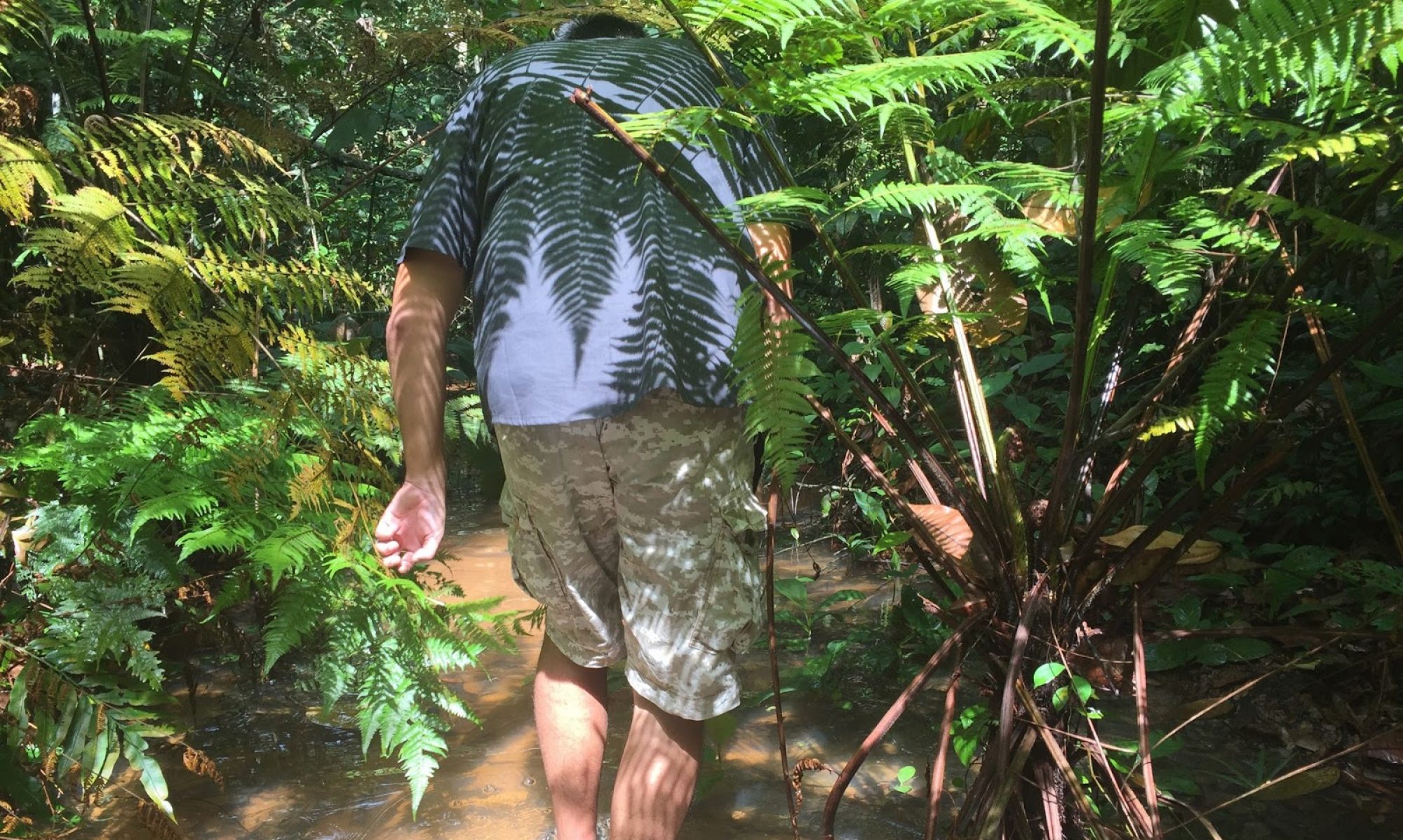
Last week we went to Bintan with our Grade 6 students, I had a few worries. Mostly I thought about the “haze” our air quality has been really bad here lately, and I didn’t see it improving. A couple of weeks ago I went to the leadership team, just to talk about what my concerns were. As teachers, we plan, prepare, and anticipate all the things that might go wrong. Sometimes, the most meaningful moments are not always what we expect.
I think for most of us, the biggest take away was the opportunity to connect with kids from a local school.
There was something incredibly rewarding about watching children from different backgrounds come together. The local students may have had fewer material opportunities than our students, but they brought an abundance of joy, generosity, curiosity, and warmth. It was a powerful reminder that having less doesn’t mean having less to give. Sometimes, it seems, it is about finding more to share.
What made the experience even more special was watching our own students rise to the occasion. They stepped beyond their comfort zones, made connections, showed kindness, and embraced the experience with genuine openness. There was no need for elaborate lessons about empathy, gratitude, or global citizenship. They were living those ideas. When we get put in the right space, with the right people, sometimes the magic happens.
As educators, we spend so much time trying to create meaningful learning experiences. Yet sometimes the deepest learning happens when we simply bring people together and give them the right place to connect, with the right things to do.
I went to Bintan thinking about the haze. I came home thinking about how our students can really impact lives.
Digging (kind of a lame pun) into our resource unit for grade 5 this week. We’re looking at water, rocks, and soil (hence the pun) and as always the students are really into rocks, while my focus is mostly water.
What’s interesting is that I’ve been trying to learn more about the quarries in Singapore in the past. Rocks have played a prominent role in our history, I’ve also been thinking more about “rocks” in the sense of cement and sand and building resources as well as an essential part of soil. I’ve tried expanding my thinking rather than trying to convince the students water is more important (and if rocks are part of soil, they may have a point).
I do think water is so interesting here though, especially with new water and how here in Singapore we really try to use every drop. I love the Open Minds aspect of this unit where we go to Marina Barrage and try to understand how important water is. I’m wondering how to make more meaningful connections to rocks and the rock cycle, also how to engage students more towards erosion and how that impacts us everywhere (again maybe with soil and land reclamation).
Anyway, trying a slightly different spin on a very familiar unit, always learning (or trying to).
Starting a new year is always kind of exciting, seeing friends, new people, maybe too many meetings.
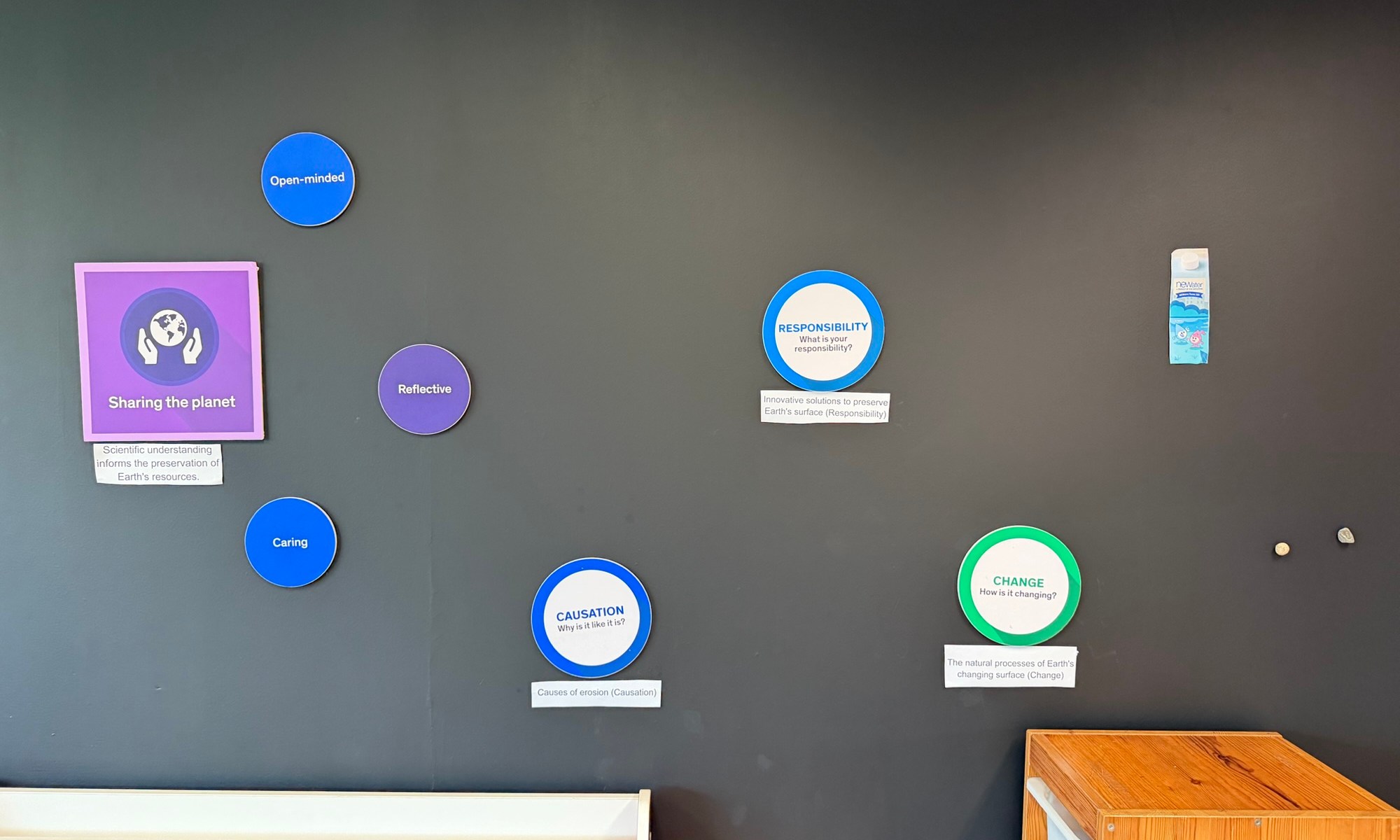
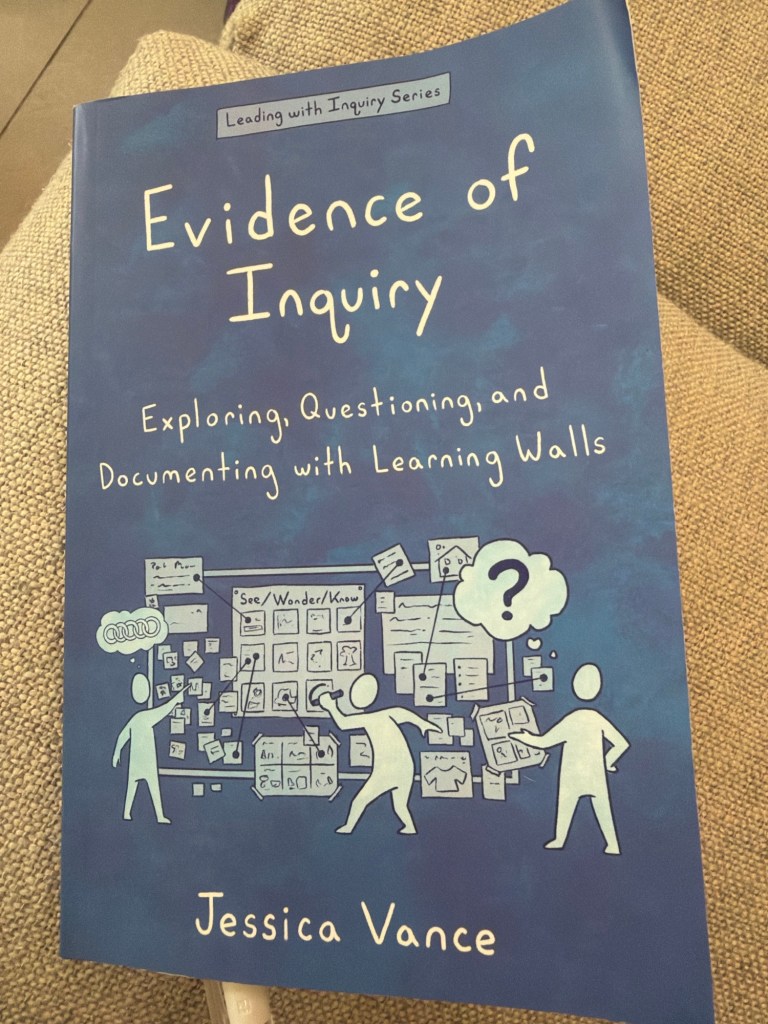
This year, one of the things I am most interested in developing is my inquiry wall.
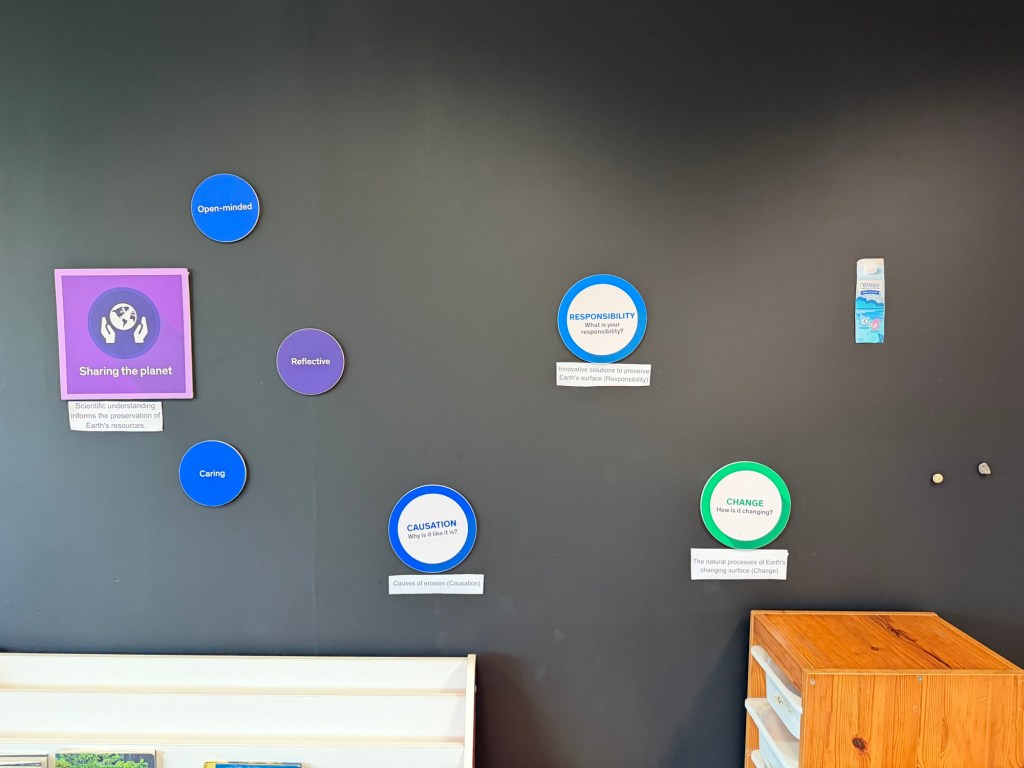
I have started with a half of a large black chalkboard (since I share my class). At the moment, it is still fairly empty, but I think that is important. I do not want the wall to begin the year looking finished. A finished wall can sometimes feel like a display of what the teacher already knows. I want this one to become a record of what the class notices, questions, investigates, connects, and gradually comes to understand.
The black background already gives it a different feeling. It makes the wall look a little more like a space for thinking than a traditional bulletin board. Chalk lines, arrows, questions, photographs, quotations, and student ideas can appear, disappear, and be revised. At least, that is the hope. I may change my mind once the chalk dust starts covering everything [including me].
I have also started thinking carefully about the artefacts that will sit on and around the wall.
For our first unit, I have placed some rocks on the board and added a picture of a bottle of NEWater. Neither object explains the unit by itself. That is part of their value.
The rocks can lead us towards questions about Earth’s surface, erosion, time, pressure, movement, and change. They can be held, compared, sorted, sketched, and examined. They are not simply pictures of rocks printed from the internet. They have weight. They have texture. They came from somewhere.
The NEWater bottle opens a different set of possibilities. It connects scientific understanding with design, infrastructure, sustainability, public trust, and the choices communities make about their resources. It is also something connected to the place where we live. Students may have seen NEWater bottles before without thinking deeply about what they represent.
That is what I am beginning to see as one of the most important purposes of an inquiry wall. It can help us look again at things that have become ordinary.
A rock is just a rock until someone asks how it formed.
A bottle is just a bottle until someone asks where the water came from, what happened to it, and why a country might invest in creating it.
I want to bring more real things into the learning wall this year. Not just polished final products, printed definitions, or carefully selected photographs, but objects that carry stories and invite questions.
Some of these objects might come from me, particularly at the beginning of a unit. Others might come from students. A piece of broken pavement, a dried leaf, a food wrapper, a newspaper clipping, a bus ticket, a small model, or a photograph taken on the walk to school could all become part of the learning.
The challenge will be making sure the objects do not simply become decoration.
An artefact should do something.
It might provoke a question. It might provide evidence. It might connect an abstract concept to everyday life. It might remind us of an earlier theory that we later revised. It might help a student explain an idea that is difficult to express only through writing.
I am particularly interested in how artefacts can move around the wall as our thinking changes. A rock might begin in a space for noticing and wondering. Later, it might sit beside an explanation of erosion. Eventually, it might connect to a proposed solution for protecting a coastline or preserving soil.
The object stays the same, but our relationship with it changes.
That feels like a useful representation of learning.
As teachers, we often feel pressure to prepare everything before the students arrive. We label the spaces, organize the resources, plan the provocations, and try to anticipate where the learning will go.
I am trying to resist completing too much of the wall in advance.
I want students to see that the empty spaces belong to them. Their photographs, questions, sketches, theories, disagreements, and discoveries should gradually take over. The wall should become less mine as the unit continues.
Perhaps getting ready for school is not always about finishing the classroom.
Sometimes it is about preparing a space that is ready to be changed.
One of the things I’ve been reminded of this month is that learning rarely happens in a straight line.
Some of it has happened in my classroom as I continue refining robotics, visible thinking routines, and the way reading connects to our units of inquiry. I’ve found myself thinking less about “covering content” and more about making understanding visible. How can students see their own thinking grow? How can a classroom tell the story of learning rather than simply display finished work?
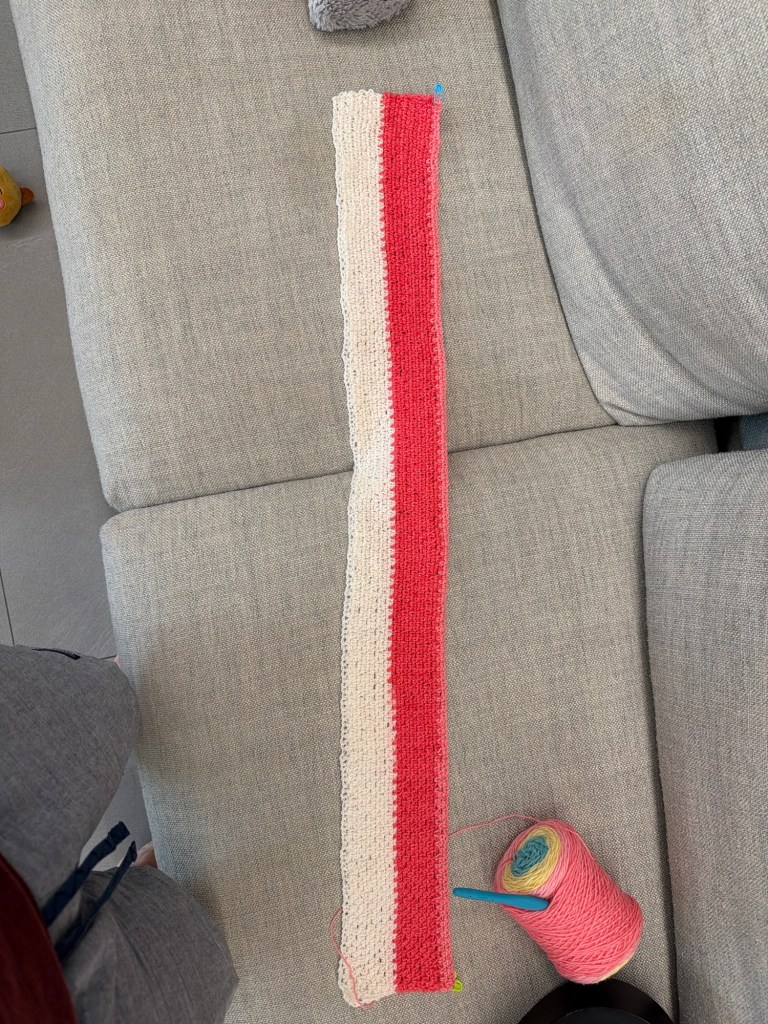
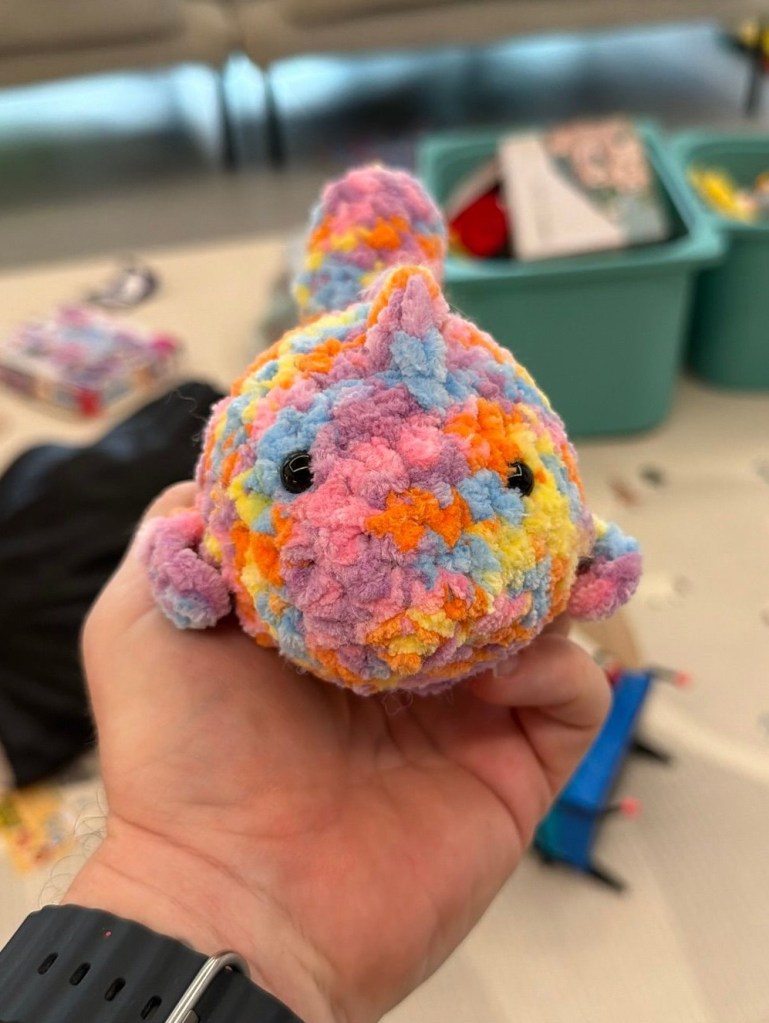
Some of it has happened with a crochet hook in my hand.
Learning a new craft has been a surprisingly good reminder of what it feels like to be a beginner again. Every loose stitch, wild edge, and finished project has reinforced something I ask my students to believe every day: progress comes from noticing, reflecting, and trying again. It’s difficult to teach a growth mindset if you never place yourself in situations where you’re growing too. Every summer I try to learn something new and this summer is crochet.
Reading has continued to shape my thinking as well. I’ve spent time reflecting on books that linger long after the final page—stories that ask how people become connected to places, to one another, and to the living world. Those questions continue to influence both my teaching and the way I think about education beyond the classroom.
Perhaps the biggest lesson this month has been a simple one: learning is richer when we create things. Whether students are building understanding on an inquiry wall, designing communities, or I’m learning a new craft after work, making something tangible forces us to slow down, notice details, and reflect on the process rather than just the outcome.
I’m hoping to carry that mindset into the new school year. Less rushing. More wondering. More creating. This year is a reminder to continue being more of a beginner and encouraging my students to think the same way
Over the last few months, I’ve found myself returning to a simple question: What does it actually mean to teach reading well?
Like many teachers, I’ve spent years collecting strategies, trying new programs and searching for ways to help students become stronger readers. But recently my thinking has shifted. Rather than looking for another activity or another routine, I’ve started looking more closely at the thinking that sits underneath reading.
Two ideas have become central to that journey.
The first is The Writing Revolution. While it is often thought of as a writing approach, I’ve become increasingly convinced that its greatest strength is how clearly it reveals thinking. If students can explain, compare, justify and connect ideas in writing, they are demonstrating something much deeper than sentence construction—they are showing comprehension.
The second is the inquiry wall.
Instead of treating reading as something that happens quietly inside each student’s head, the inquiry wall makes our collective thinking visible. Questions stay on the wall. Predictions evolve. Connections between texts emerge over days and weeks. Students begin to see that understanding isn’t something you arrive at after finishing a chapter; it’s something you build together. We can also authentically link our learning to our reading as I’m doing my best to mix read aloud with our units of inquiry.
What excites me most is that these ideas seem to complement each other. Inquiry encourages curiosity. TWR provides the language and structure to communicate that curiosity with precision. One helps students ask better questions. The other helps them think more clearly about the answers.
I’m still very much at the beginning of this journey. There will be ideas that work beautifully and others that don’t. But that’s part of the process. Reading instruction shouldn’t be static any more than reading itself is. Plus we learn more effectively (I hope) when our reading (and writing) instruction is linked to our units.
My hope is that our classroom becomes a place where books aren’t simply completed, but explored. Where students learn that great readers notice patterns, wrestle with uncertainty, change their minds and leave a trail of thinking behind them for others to build upon.
This year I decided to enrol in the online training for The Writing Revolution. Coming from teacher’s college and the balanced writing idea I was totally shocked regarding the science of reading (for a second or two) but then it made sense to me. We show students how to do math, we show science, we show so much, but were we explicitly teaching reading skills. I teach upper elementary, so most of my work was reading to learn, but the whole idea forced me to rethink what I believed.
So, I researched (which is what I love to do) and then kind of got into the writing aspect. My students have always written a lot, and I feel I’ve always provided insightful feedback on individual pieces to help individual students improve. But I’m not sure I was always explicitly teaching specific sentences types, or conjunctions. I used these terms, but not as directly as I probably could have.
This year’s focus (so far anyway) has been on how to be more explicit in my language instruction. I’ve really enjoyed the whole larger picture of The Writing Revolution. In a PYP environment, and transdisciplinary world, this resonated with my beliefs about teaching and learning. It also allows me to pursue our Units of Inquiry a little more thoughtfully in our Literacy blocks.
I guess I wonder how other international schools are feeling about this US kind of approach to things? How does it go over in different places? How are people feeling about it?
Spending time with individuals and seeing them as a person, always has me thinking of next steps. Their daily interactions are of me saying something like, this part is great, next step is this. Since I’ve always been focused on the next step, I’m not sure I’ve properly celebrated yet where they are, but we started to this week. After we took the week wrapping up our unit, trying to provide evidence of all the things we knew, I was feeling a bit overwhelmed. But after looking at how far they’ve come since their pre-assessment, and looking at how well they’ve scored on the rubric, I’m actually very happy with what we’ve accomplished. We learned a lot! Today was a chance for us to kind of celebrate as a class and share our thinking on the past unit. Happily it’s report writing time, and I’m entering into this stage full of optimism for our kids.
This isn’t really the post I’ve been wanting to return with, but I just want to get back into the habit of writing.
Wow, a lot to unpack for sure. Some people were set free today. I get that it happens at international schools, but still pretty full on. And then we’re unpacking our next unit.
We get this idea that we hear from the past to kind of dictate our future. How do we really look at our central idea without drawing from past experiences. I get that it is impossible to separate yourself from your past, we use our context to make sense of our world. But is it possible to be really empathetic about how other people might not be included, like how do we know what the kids really need if we don’t ask them.
I guess all this brings me back to Schwab (2013), and how we bring the theory into the practical. Also there is this idea that we have to make a decision, run the course (curriculum) and then judge. It’s so hard at the unpacking stage to really understand how our decisions are going to work. I know that we can modify and tweak as we go through, but what consequences do our decisions have (I’m thinking this both because of the people no longer with us, and the journey we are about to go on with our students).
I guess I just wonder about how these practical problems require multiple perspectives. How do we include (all, most, representatives) of the community into our decision making process. How do we get their feedback afterwards? And I guess, does it really matter?
The beginning of the year is always kind of interesting. We have a lot of opportunity to get to know our new group of kids, but one of the ways we know them is through testing. I fully understand that we need to know where kids are to get them to their next step. But some of the standardised testing, seems a little bit forced?
I’m just on this because I teach two classes, and it seems like I’ve been lucky with the draw so I get all the standardised tests. I’m not really worried about the loss of teaching time, I’m more just curious if it has the desired effect.